

Leading the fight against ash dieback
This project has now ended.
Devon's treescapes are stunning and crucial habitats for so much wildlife. But they are under threat from ash dieback which is estimated to kill at least 90% of Devon’s ash trees in the coming years. It will affect everyone, but everyone can be part of the solution.
From 2020-26, this project led Devon’s response to ash dieback on behalf of the Devon Ash Dieback Resilience Forum, working with communities, landowners and businesses to help protect Devon’s treasured treescapes. Together, we planted and nurtured over 250,000 trees outside woodlands across the county. It was made possible with funding from The National Lottery Heritage Fund and thanks to National Lottery players.
If you’d like to support future projects like this, please get in touch.
Learn about the project's achievements
- Planted 262,796 trees outside of woodlands
- Held 83 free tree community hubs, distributing trees locally
- Completed over 311 free advisory visits to landowners
- 155km of hedgerow were brought into better management
- 39,000 trees grown in two community tree nurseries
- Set up 40 micro-nurseries within schools so they can grow their own local trees
- 191 Landmark Trees planted
- 597 orchard (fruit root) trees planted
- 2,000 citizen scientists took part
- 94 schools engaged
- 280 inspiring events delivered with over 9,000 attendees
Devon Grown Trees

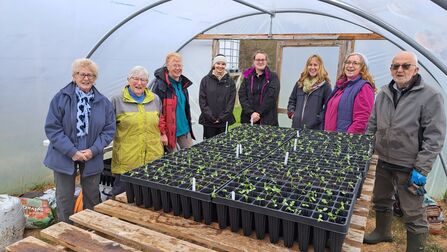
Broadclyst Tree Nursery volunteers
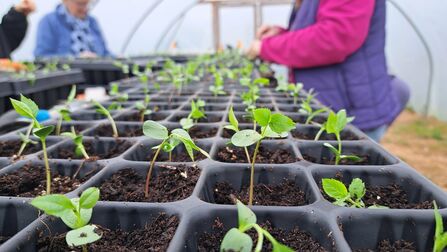
Two tree nurseries were established at Meeth Quarry Nature Reserve and on National Trust land in Broadclyst, where dedicated volunteers collected wild seeds and nurtured native broadleaved saplings, including oak, rowan and crab apple.
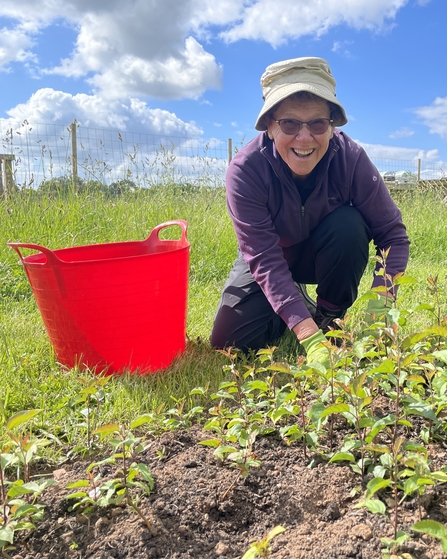
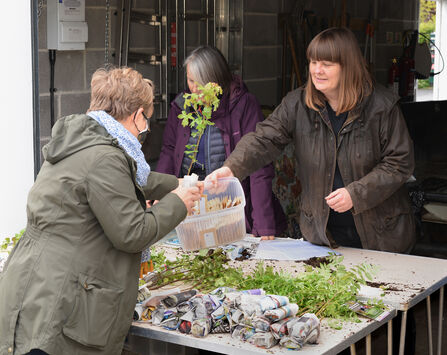
Distributed through community Tree Hubs, these nursery-grown trees - alongside thousands more donated by The Woodland Trust - helped provide over 22,000 free trees and planting packs to communities and individuals across Devon.
Working in partnership with FWAG South West, the tree officer also supported landowners directly through 311 advisory visits and 134 planting days. With further support from the Woodland Trust, 262,796 free trees were distributed for planting outside woodlands, helping to strengthen hedgerows and restore Devon’s treescapes.
Tree planting and nursery resources
- Planting Instructions (5.97 MB)
- Growing trees from seed guide (7.02 MB)
- Hedgerow and tree tagging (6.57 MB)
Voices from Saving Devon’s Treescapes
Hear from volunteers and communities impacted by the project. You can also read our blog: Stories from Saving Devon's Treescapes.
Community involvement
We've supported local communities by providing micro-nursery kits to grow new trees, donating over 200 landmark trees with the hope they will become much-loved local features, and recognising community efforts through the Treescape Champion Award.
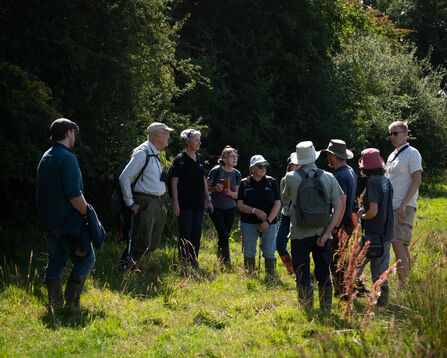
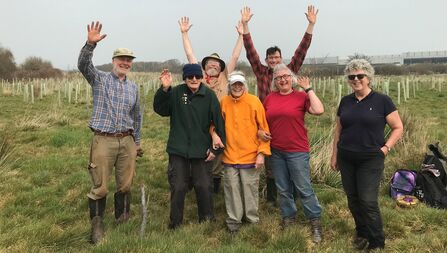
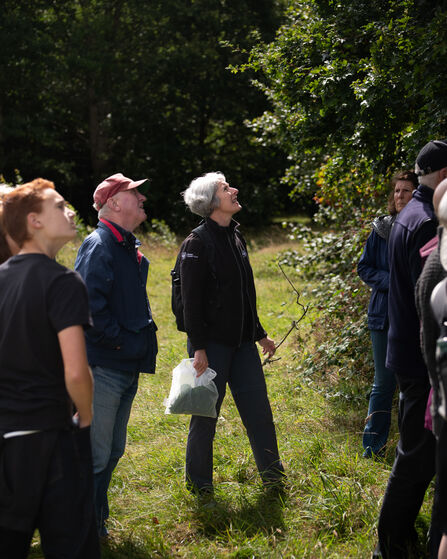
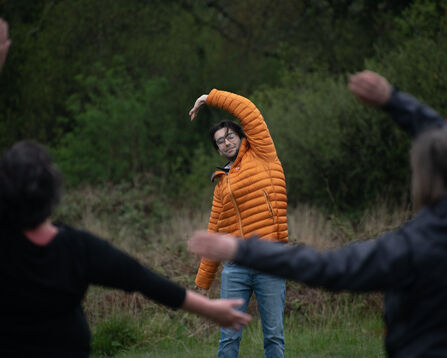
More than 100 events and activities offered opportunities to get involved, including tree and lichen identification, planting days, land management workshops, citizen science, nature inspired Tai Chi and bat walks. Schools also took part by planting in school grounds, setting up their own micro-nurseries, and outdoor learning sessions focused on trees.
Rob Darch

Citizen Science
Monitoring key species, such as brown hairstreak butterfly eggs, lichens and bats, helps us understand and assess the health of our treescapes. Many of the project's citizen science opportunities continue, supported by partner organisations.
Features Monitored |
Project Achievements |
Get involved and legacy |
| Notable, ancient & veteran trees | A total of 263 people attended tree identification walks, where they were trained to go on and make recording trees. | Submit your records to Devon Biodiversity Records Centre or to the Woodland Trust’s Ancient Tree Inventory. |
| Brown hairstreak butterflies | We partnered with Butterfly Conservation to complete 320 egg surveys, over 18 events with 176 people attendees. | Submit your records using Butterfly Conservation’s iRecord Butterflies app and contact them to get involved with surveys. |
| Lichens | 759 people attended lichen training events, submitting 914 records. It was so popular that the regulars became an established group. | Contact the South West Lichen Group a local group of the British Lichen Society. |
| Bats | 1,352 successfully completed bat surveys with over 2 million bat detections recorded Devon-wide, including all 16 Devon-resident bat species. | Other organisations are borrowing and using the detectors in their survey work going forward. Find out more. |
The Ash Archive
The Ash Archive was a place for members of the community to share creative and emotional responses to ash dieback, celebrating and remembering our ash trees.
All contributions were welcome, from paintings and poems to photographs. Alongside public submissions, we commissioned photographer Robert Darch and poet Ceri Baker to help ensure no ash is forgotten.
Here is just a snippet of the beautiful work that was created:
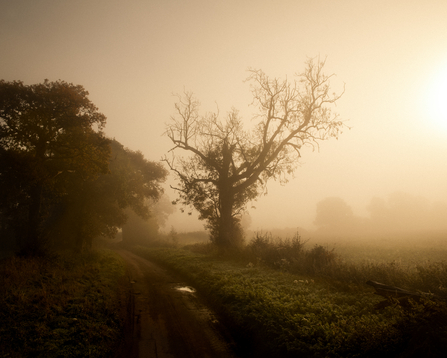
Robert Darch

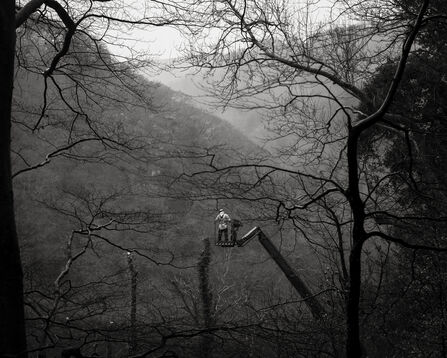
Robert Darch

created by Churston Ferrers Grammar School
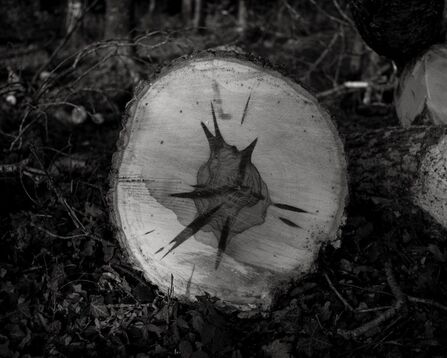
Robert Darch
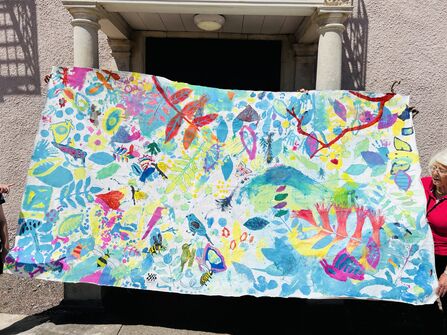
Created at Torres Abbey during a family drop in event
Frequently Asked Questions About Ash Dieback
What is ash dieback?
Ash dieback is a fungus which originated in Asia and was introduced to Europe around 30 years ago. The fungus grows inside an Ash tree, eventually blocking its water transport systems, causing it to die. It has caused a big problem because, unlike the Chinese and Manchurian species, our native ash species did not evolve with the fungus and have no natural defence against it. Ash dieback is estimated to kill 90% of Devon's 1.9 million ash trees in the coming years.
Can we plant ash trees?
At the moment you should not plant ash trees. For more recent information and advice relating to ash dieback in Devon please visit the Devon Ash Dieback Resilience Forum webpages: https://www.devonashdieback.org.uk/
What should we do with our ash trees?
A dead ash tree can still provide a lot of things for our ecosystem, so if the tree poses no threat to life (e.g. it’s not close to a house, or along the side of a road) then we recommend leaving the tree where it is. For more information please visit the Devon Ash Dieback Resilience Forum webpages: https://www.devonashdieback.org.uk/
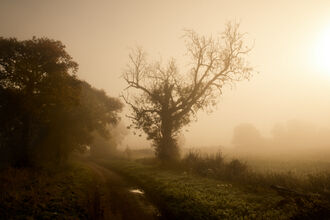
Planting project reaches its 250,000 tree target
A pioneering community tree project has surpassed its target of planting a quarter of a million trees in Devon.
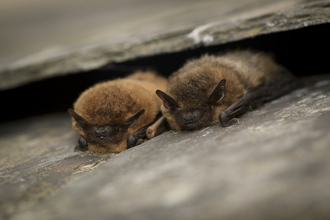
Charity wants ‘bat detectives’ for night-time investigation
Devon Wildlife Trust is calling on people in Devon to help it discover more about the county’s bats.
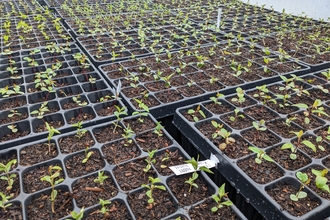
Nursery’s first trees signal ‘nature’s comeback’
Devon Wildlife Trust's tree nursery is releasing its first trees – the culmination of two year’s dedicated work by its staff and…


Working in partnership with
We are also grateful for the support and guidance from Natural England and the Environment Agency.
Project funders
This project was made possible with The National Lottery Heritage Fund and thanks to National Lottery players. Additional funding came from One Tree Planted and The Halpin Trust.
The Woodland Trust played a vital role by generously donating thousands of trees, guards and stakes that were planted across Devon.


Become a member and support our work
The vital work we do for nature depends on the support of the people who care about the future of Devon's wildlife and wild places.