Devon’s Wildcat Festival

Devon’s Wildcat Festival

Tom Mason

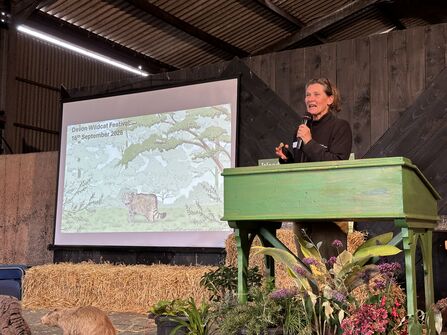
The South West Wildcat Project brought conservationists, researchers, land managers and wildlife enthusiasts together for a day learning about one of Britain's rarest mammals and the project hoping to return the European Wildcat to Devon (Wednesday 16 September 2026).
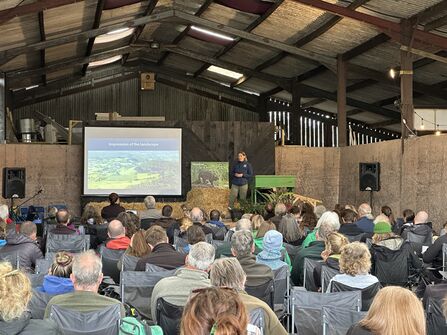
the backs of audience members sat listening to the presenter in a barn

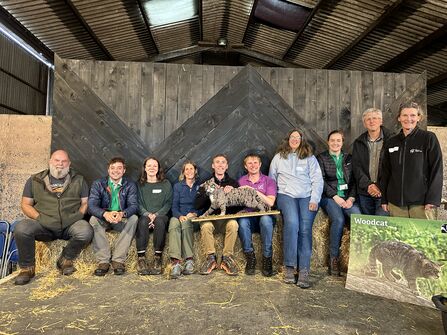
Hosted at Rewilding Coombeshead, where conservationist Derek Gow has established a wildcat breeding centre, the event brought together experts from across the UK and Europe to share the latest research, experiences and ambitions for wildcat recovery. Attendees were also fortunate to see some captive wildcats during a guided tour of the site, offering a rare glimpse of these elusive animals.

The History of European Wildcats

European wildcats, known in England as the woodcat, were once widespread across Britain but disappeared from England and Wales by the late 1800s mainly due to human persecution. Conservationist Derek Gow explored the species' long history in Britain and its place in our natural heritage.

Today, wildcats are Britain's rarest mammal and are critically endangered in the UK. While conservation efforts in Scotland are focused on preventing their extinction, successful recovery projects across mainland Europe are showing that wildcat populations can rebound with the right protection and habitat restoration.

Wildcat crouched on tree

Elliot Smith

Why Wildcats Matter

Representatives from Forestry England, a key project partner, spoke about the important ecological role wildcats play as a native woodland predator.

Wildcats primarily prey on small mammals and naturally occur at low densities, meaning they are unlikely to have significant impacts on rare or protected wildlife species. Restoring wildcats is not only about saving a threatened mammal, but also about helping to restore healthy, functioning ecosystems.

Lessons from Across Europe

Speakers Thomas Mölich (BUND Wildkatzenbüro) and Imke Nabben (ARK Rewilding Nederland) shared insights from their extensive research into wildcat conservation in Germany and the Netherlands respectively, where people successfully live alongside recovering wildcat populations.

Their work highlighted how reconnecting woodland habitats has allowed wildcats to move more freely across the landscape, helping populations recover and thrive. They discussed efforts to reduce hybridisation (breeding) with domestic cats and how European wildcats have now become a powerful flagship species for wider habitat restoration and environmental awareness campaigns. 

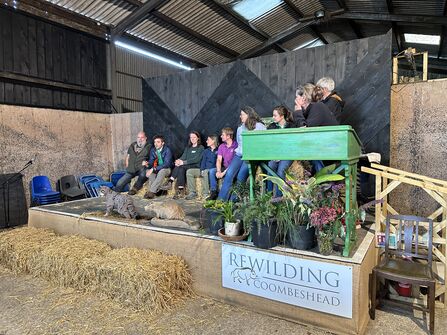
Wildcat in open woodland area compared to four domestic cats sat around hay bale

@liz.scott.art

Understanding Hybridisation

One of the topics discussed in depth was the potential for hybridisation between wildcats and domestic cats.

Research presented by Sian Moody at Exeter University, identified how promoting responsible domestic cat ownership, including neutering and good welfare practices, could reduce the risk of interbreeding between the different species. European studies have suggested that wildcats generally prefer to breed with other wildcats rather than domestic cats. In Germany, breeding between wildcats and domestic cats remains low even though there are significantly more domestic cats in the country (15 million total). 

Maintaining a healthy wildcat population is going to be a key aim of any reintroduction to Devon.

Cats Protection, which is already involved in the Saving Wildcats project in Scotland, highlighted the importance of domestic cat welfare and the positive role cat owners can play in supporting both wildcat conservation and responsible pet ownership.

Importantly, speakers emphasised that what is good for domestic cats is also good for wildcats.

the stripy tail of a captive bred wildcat slinking away through green grass

Credit: Tom Mason

The Future of Wildcats in the South West

The South West Wildcat Project continues to gather momentum as plans progress for the potential return of wildcats to the region. The recently published feasibility study found that a sustainable wildcat population could thrive in South West England, while independent research by the University of Exeter revealed that 80% of people surveyed across the region were supportive of their reintroduction.

Our Wildcat Officer, Cath Jeffs, outlined the project's vision and next steps, including continued engagement with communities, landowners and stakeholders.

Although releases are not imminent, Devon Wildlife Trust and its partners hope to see wildcats return to South West England within the next few years, subject to funding and project development.

The Wildcat Festival showcased the growing enthusiasm, expertise and collaboration behind efforts to restore wildcats to South West England. While there is still much work to do, the event reinforced a shared vision: a future where this iconic native species once again thrives in our woodlands.

A huge thank you to all the speakers, partners and attendees who helped make the day such a success.

Find out more about the South West Wildcat Project.

Read our wildcat FAQs

Speaker biographies

Cath Jeffs, Devon Wildlife Trust

Cath Jeffs organised the Wildcat Festival and has led the wildcat programme at Devon Wildlife Trust since 2023. Previously with RSPB, she led cirl bunting conservation work, including the first successful passerine reintroduction in Europe in Cornwall. Cath also serves on the Aquatic Warbler Reintroductions Scientific Advisory Board and has a lifelong passion for wild cats. 

Nick Bruce-White, Devon Wildlife Trust

Nick Bruce-White chaired the Wildcat Festival and has been CEO of Devon Wildlife Trust since 2023, leading its work to restore nature across Devon’s land and sea. Previously, he held a range of senior roles at RSPB, including Regional Director for Southern England and acting Director for RSPB England. Raised on a farm in Wiltshire, Nick has a strong interest in the role of nature-friendly farming in restoring biodiversity.

Ed Parr Ferris, Forestry England

Ed Parr Ferris is the Species Recovery Manager of Forestry England's Forest Wilding Programme, leading and supporting species recovery and reintroduction projects across England. He previously led the successful Two Moors Pine Marten Project, which reintroduced pine martens to South West England, and has also played key roles in the Devon Beaver Project and Devon Greater Horseshoe Bat recovery programme.

Kelly Hollings, Forestry England

Kelly Hollings is Species Recovery Officer for the North District at Forestry England, leading the Kielder wildcat feasibility project. She previously worked with the National Trust and spent many years at Northumberland Wildlife Trust on species recovery projects, including large-scale water vole reintroductions in Kielder Forest.

Derek Gow, Rewilding Coombeshead

Derek Gow is a reintroduction expert, farmer, and author known for his work with various species, including water voles, white storks, wildcats, and Eurasian beavers. He has played a significant role in the reintroduction of these species to the UK. Gow's farm, Rewilding Coombeshead in Devon, is a rewilding site where he breeds and reintroduces native species. His work has sparked national conversations on rewilding and reshaping Britain's relationship with its natural heritage.

Thomas Mölich, BUND Wildkatzenbüro

Thomas Mölich is one of Europe's leading wildcat experts and has spent more than 30 years researching and conserving the species. As Scientific Director of BUND's Wildcat Rescue Network, he has played a key role in Germany's wildcat recovery, helping reconnect habitats and support the return of wildcat populations through landscape-scale conservation projects.

Imke Nabben, ARK Rewilding Nederland

Imke Nabben is a biologist and ecologist who has spent the past eight years working on rewilding projects in the southern Netherlands and across borders with Belgium and Germany. Since 2020, her work has focused on European wildcat monitoring, habitat connectivity, and migration corridors, alongside public communication and engagement around wildcat recovery.

Abby Parravani, Forestry England 

Abby Parravani is the Nature Recovery Manager for Forestry England’s West District, she oversees the development and delivery of a suite of wild area and species recovery projects in West District under the Forest Wilding Programme. 

Sian Moody, University of Exeter

Sian Moody is completing a PhD in Anthrozoology, attached to the South West Wildcat Project. Her PhD investigates the social and ethical aspects of wildcat conservation, exploring the many ways humans and animals lives influence and affect each other to identify solutions to human-wildlife conflict and the poor treatment of animals. Sian was embedded in the South West Wildcat Project during the feasibility phase, which led her to research wildcat hybridisation. Sian is now working with the Devon Wildcat Project, local cat rescues and vets to co-develop a hybridisation strategy.   

Jeff Knott, Cats Protection

Jeff Knott has been Advocacy & Influence Director at Cats Protection since 2024, leading campaigns, communications, and advocacy on cat welfare issues across the UK. Before joining Cats Protection, he spent 16 years working in nature conservation in a range of senior roles.

Become a member and support our work

The vital work we do for nature depends on the support of people who care about the future of Devon’s wildlife and wild places.

Become a member