
As we approach the end of the meteorological summer, it will come as no surprise to anyone when it is almost inevitably confirmed as the hottest English summer, and driest July, since records began in 1884. Yet although it may feel like we can’t remember what rain looks like, we need only go back to the start of the year to have also clocked one of Southern England’s wettest winters.
Hotter, drier summers and wetter winters: exactly one of the key climate change signals that scientists have been projecting for the UK for decades. In that context, some people have spoken about the weather this year as the ‘new normal’. I would disagree: we should not trivialise such profound shifts as ‘normal’. Nor can it be suggested that we are in any kind of stable state – alas the baseline is continuing to shift and today’s extremes will be tomorrow’s averages. Indeed, only when humanity achieves net-zero greenhouse gas emissions globally, and keeps them there for a sustained period, will we begin to see climate stabilisation.
That being the case, the impacts we have experienced this year of more extreme weather patterns are here to stay and we must adapt towards more effective ways of mitigating those impacts. Frontmost in mind of those impacts will be fire. Sometimes caused deliberately, occasionally accidentally but often a result of pure carelessness or negligence, I hesitate to use the term ‘wildfire’ as for the most part, “virtually all wildfires” in England are human-ignited fires (Natural England).
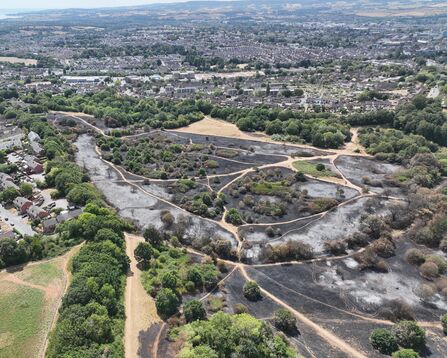
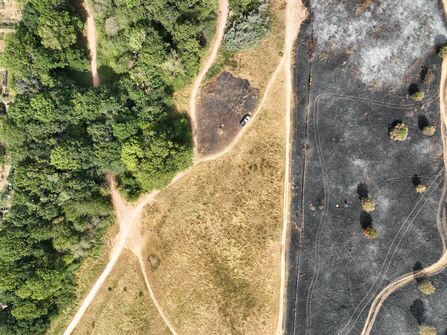
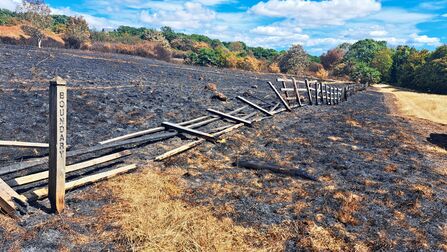
Here at Devon Wildlife Trust, we have experienced firsthand the devastating impact of fires in the Exeter Valley Parks. At Mincinglake Valley Park, 50 acres of land was burned; 700m fencing destroyed; and precious habitat for birds, butterflies and harvest mice lost in minutes. Elsewhere in the UK, we have seen significant fires at some of our most important wildlife habitats on the Suffolk Coast, the Cairngorms and South Pennines.