

Narrow-headed ant. Photo, John Walters
Securing the Survival of England’s Rarest Ants
It's the little things that matter...
A new conservation project is set to provide a securer future for two of the UK’s rarest ant species.
The ants in question are the Narrow-headed Ant (Formica exsecta), the only English population of which is found at Devon Wildlife Trust’s Chudleigh Knighton Heath nature reserve, and the Erratic Ant (Tapinoma erraticum), a Nationally Scarce species which was recently discovered living at the Trust’s Bovey Heathfield nature reserve.
Together both nature reserves are some of the best and biggest remaining examples of a heathland landscape which once covered much of the surrounding area of South Devon.
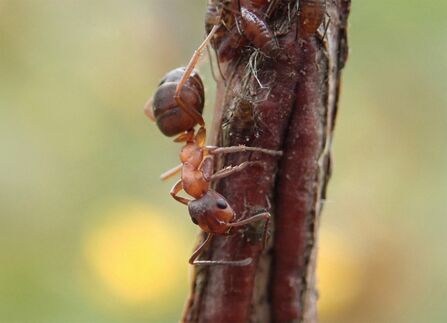
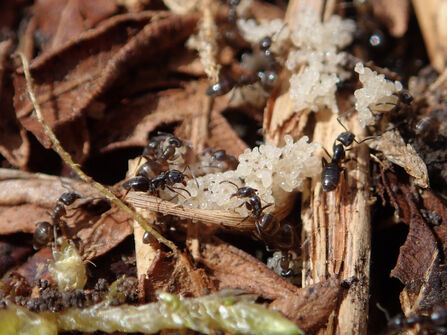
Credit: John Walters
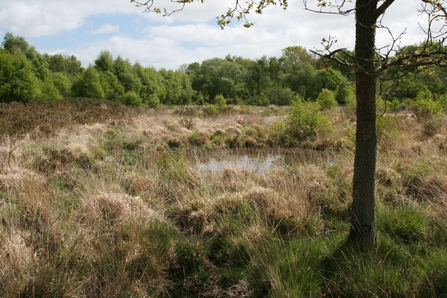
Chudleigh Knighton Heath (Simon Williams)
How to identify these ants
The Narrow-headed Ant takes its name from the distinctive ‘pinched-look’ of its head. A medium-sized black-and-red ant, it is currently found only in Devon and at a handful of sites in Scotland. A recent discovery on the Royal Estate at Balmoral captured national headlines.
The Erratic Ant is a dark brown to black ant whose name derives from its distinctive, high-energy foraging behaviour, as it scampers in fast, meandering and unpredictable movements.
Why protect ants?
Although small and often overlooked, ants play an important role in healthy ecosystems. They help recycle nutrients, improve soil quality, disperse seeds and support a wide range of other wildlife.
Both ants have seen dramatic national and local declines in their numbers over the last 150 years, mostly because of the loss of their favoured heathland homes. It’s estimated that the UK’s lowland heaths have shrunk by 85% during that time through changing agricultural land use, the planting of conifer plantations, building and road developments and poor management.
Protecting these ant species also means protecting the unique heathland and grassland habitats they depend on, benefitting many other plants, insects and animals that share the same environment.
Project aims and partners
Now a new project is planning to improve the remaining heathland homes of both the Narrow-headed and Erratic ants, while also safeguarding their futures by starting new colonies at suitable sites nearby.
The project also promises to leave a legacy long into the future. It will produce Species Recovery Plans to guide long term conservation of both ant species across South Devon and beyond at other lowland heaths in Dorset, Surrey and Hampshire.
The project is a collaboration between two conservation charities – Devon Wildlife Trust and Buglife. The three-year project has been funded by the UK Government through Natural England’s Species Recovery Programme as part of the Wild Again: Restoring England's Wildlife campaign.


