Bycatch-22: first-ever report exposes shocking scale of wildlife deaths in UK commercial fishing

Bycatch-22: first-ever report exposes shocking scale of wildlife deaths in UK commercial fishing

More than 10,000 seabirds, 1,000 whales and dolphins, and hundreds of seals are being accidentally killed every year by commercial fishing boats operating in UK waters, according to a first-ever report exposing the true scale of bycatch in the UK.

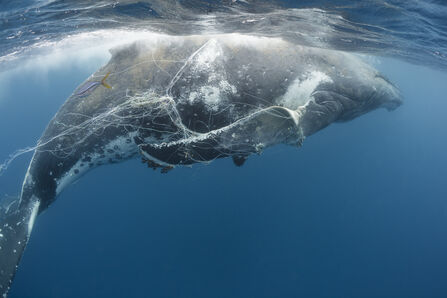
The new analysis from Wildlife and Countryside Link reveals the devastating toll bycatch is having on marine wildlife, with protected and endangered species among those dying in huge numbers. Animals such as humpback whales, razorbills, and seals are among the victims exposed, with case studies highlighting the plight of ‘Legs’ the seal who was tangled in a net for seven years, among others. 

Bycatch is the accidental capture and killing of non-target animals during commercial fishing. It is driving population decline, suffering, and extinction risk for marine animals. The report warns that the true scale is likely far worse as a result of chronic underreporting and a lack of monitoring across much of the UK fishing fleet.

The report shows that every year commercial fishing boats are catching: 

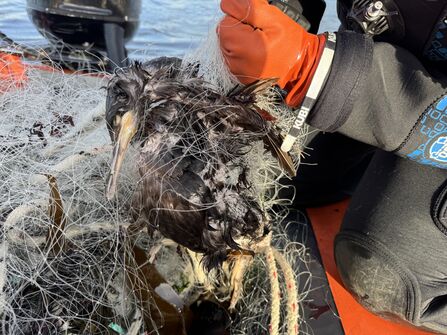
  • Over 10,000 seabirds
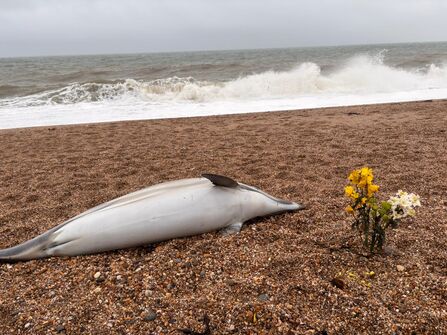
  • Over 1,000 cetaceans, including harbour porpoises, common dolphins, and humpback and minke whales
  • Around 500 seals
  • Over 120 tonnes of protected sharks, skates and rays
  • Over 1,000 endangered Atlantic salmon

The report also shows that the UK Government is failing to meet legal obligations to achieve Good Environmental Status in UK seas, with bycatch identified as a major cause of marine wildlife decline.

Richard Benwell, Chief Executive of Wildlife and Countryside Link, said: 

“Thousands of animals die every year in UK waters because of avoidable fishing deaths. From razorbills and dolphins to endangered salmon and sharks, the scale of destruction exposed in this report is shocking, with animals dying in awful and unnecessary ways.

“The Government mustn’t let these terrible losses continue. To protect marine wildlife Ministers must finally deliver strong bycatch action plans, backed by strict mandatory monitoring and enforcement, before more wildlife is pushed closer to extinction.”

Wildlife and Countryside Link is calling on the UK Government to urgently introduce strong Bycatch Action Plans and require remote electronic monitoring on all fishing vessels operating in English waters.

Carli Cocciardi, Devon Wildlife Trust’s Marine Nature Recovery Officer said:

“Seeing dolphins in the wild in seas around Devon is one of the greatest wildlife spectacles I have ever experienced, which makes witnessing bycaught marine life even more distressing, especially knowing that it is avoidable.

Our marine megafauna (large marine animals) act as sentinels for the health of the marine environment and are already suffering huge pressures from habitat loss, climate change, pollution and recreational disturbance.  However, bycatch is the greatest threat to many of our most beloved marine wildlife here in Devon, including Common dolphins, Harbour porpoises and numerous shark and seabird species.  

No one wants bycatch – we all want healthy seas, teeming with life, but as things stand, Government regulations are failing to provide the adequate level of protection to these iconic species and are failing to support the fishing industry to implement necessary changes.  

Bycatch is an avoidable threat that we can solve if we all work together. We need the Government to recognise this silent emergency and act now to end bycatch.”

Ruth Williams, Head of Marine Conservation at The Wildlife Trusts, said: 

“The scale of dolphins, sharks, seals and seabirds accidentally caught in fishing gear is shocking. For many in the fishing industry, bycatch is a distressing and unwanted outcome – these species are critical to the health of our seas, and their deaths will have serious consequences on marine ecosystems. 

“Despite there being solutions available, successive Governments have failed to address this silent and largely unseen crisis. Many of our much-loved marine species are already facing a cocktail of threats at sea, and so the first step in reversing their decline must be urgent Government action to implement, innovate and monitor solutions that protect marine life from these preventable deaths.”

The report also highlights successful solutions already being used in UK fisheries. For example, in Filey Bay, on the Yorkshire coast, a collaboration between fishers and conservationists reduced seabird deaths from around 700 a year to just four or five by trialling new methods, such as heavier nets. In Scotland, trials of weighted ropes in creel fisheries have also shown success in reducing the risk of whales becoming entangled in fishing gear. Research by the Scottish Entanglement Alliance found most whale entanglements were caused by floating ropes between creels, with early trials of weighted ropes welcomed by fishers and showing strong potential to prevent unnecessary wildlife deaths. 
Read the new report 

What can we do?

In the weeks and months ahead, we’ll be sharing more ways that you can get involved and take action to help Devon’s marine wildlife - from spreading the word in your community, to emailing your MP. 

To stay in touch about our marine campaigns, head to our Save Our Seas page and sign up.

Notes to Editors

Additional quotes

Additional supporting quotes:

Lucy Babey, Director of Programmes at ORCA, said: “For far too long, bycatch has been treated as a known problem rather than an urgent one. We have known for decades that whales, dolphins, porpoises, seabirds and seals are being accidentally caught and killed in UK fisheries, yet action has repeatedly failed to match the scale of the threat. This report shows the devastating consequences of that delay, with more than 1,000 cetaceans and over 10,000 seabirds estimated to die every year in UK waters. The solutions are not complex: we need legally binding Bycatch Action Plans, mandatory monitoring across the fleet, and a clear commitment from Government to stop these preventable deaths.”


Mark Owen, Head of Fisheries at the Angling Trust, said: “We are now starting to uncover the true impact that commercial fishing is having on our Atlantic salmon stocks at sea, a fish that has been recently designated as ‘endangered’ by the IUCN. Salmon angling is heavily regulated in the UK and it is time that the enforcement agencies acted on the commercial sector to save a species threatened with extinction.” 


Sarah Dolman, Senior Ocean Campaigner at EIA UK, said: “Fisheries bycatch in UK waters poses a serious threat to beloved marine wildlife, including death and severe injuries to more than a thousand dolphins, porpoises and whales every year, particularly in static nets. The UK government has the opportunity to lead the global standard to prevent bycatch, but despite knowing about and studying bycatch for decades, has so far failed to implement and enforce existing laws to protect marine wildlife from entanglement. More needs to be done to prevent bycatch of the UK’s protected species, including investing in alternative gears to those with the highest mortalities.”


Jack Renwick, Conservation Officer at The Shark Trust, said: "This report highlights the level of bycatch for just a select few protected shark and skate species. Hence, these figures are just the tip of the iceberg of the complex issue of elasmobranch bycatch in fisheries, with a wide range of species subject to chronic underreporting. Whilst there are some current bycatch projects, a stronger focus on sharks, skates and rays in bycatch mitigation programs is required, and compliance with existing recording requirements needs to improve to enable sustainable fisheries management."


Katie-jo Luxton, the RSPB’s director of conservation, said: “More than 10,000 seabirds are estimated to be killed each year in UK waters through bycatch, yet these figures likely don’t show the true scale due to gaps in monitoring and reporting. Without robust, consistent oversight across fisheries, it is impossible for the UK Government to accurately assess impacts or track progress towards its own environmental targets. Better monitoring, greater transparency and targeted action are key to tackling these needless deaths.”

Case studies

‘Legs’ is an adult female grey seal in Cornwall who shows the dire welfare consequences of live entanglement in fishing gear. In January 2019 she was recorded as entangled in a single encircling mesh of monofilament fishing net. This net began cutting into the flesh of her neck and by 2020 a golf ball-sized swelling developed. By 2021 the net was no longer visible as skin had likely grown over it. Miraculously, in 2022 Legs had a pup but in 2025 a large open wound developed around her neck. She then experienced repeated and violent neck spasms considered by vets to be a neurological response to pain. Whilst the wound appeared to have healed in 2026, Legs remains entangled over 7 years later. Unfortunately, Legs is rarely at a safe rescue location so cannot be disentangled by rescue organisations. She is just one of many seals experiencing years of entanglement. (images of Legs are available on the link above). 


Filey Bay in Yorkshire is home to a small-scale inshore fishery targeting sea trout. Three miles away, the 400ft-high Bempton Cliffs are home to approximately 500,000 seabirds including gannets, puffins, guillemots, razorbills, and kittiwakes. It is the largest mainland colony of seabirds in the UK. Razorbills and guillemots also now nest in cliffs above Filey Brigg. The proximity of these two seabird colonies to Filey’s key fishing areas led to increased instances of seabird mortality due to entanglement in gillnets. Since 2010, the Filey fishery has worked closely with the RSPB, trialling innovative methods of bycatch mitigation. Using a combination of measures, including net attendance and the adoption of heavier nets, fishers in Filey Bay achieved a reduction from approximately 700 seabird deaths per year to just 4 or 5.  This shows how effective tangible action to reduce bycatch can be.


The Cornwall Wildlife Trust Marine Strandings Network started in the winter of 1992/93 when 123 dolphins washed up dead (stranded) around the Cornish coast in three months. Bycatch from the bass pair trawl fishery was a prime suspect in these strandings, and the records helped change fisheries management. EU regulations implemented in 2004 specified compulsory use of acoustic deterrent devices on some vessels and an observer scheme to monitor bycatch. The UK government also implemented a ban on UK bass pair trawl fishery within 12 nautical miles of the English coast. This had some impact on cetacean strandings, but unfortunately deaths have begun climbing again in recent years. 


The Scottish Entanglement Alliance was formed in 2018 to investigate large marine animal entanglements and is made up of a coalition of the Scottish Creel Fishermen’s Federation, scientists and conservation and welfare charities. Interviews conducted with creel fishers found that the majority of the entanglements (83% of minke whales and 50% of humpback whales) occurred in loops of floating rope in the ground lines between creels. Early trials of weighted ropes have been successful and welcomed by those fishers in the handful of vessels currently using them.

History of Bycatch

  • For some species, data on bycatch in UK waters goes back several decades, with a huge cumulative total loss of individuals and no clear decrease in deaths during that time.
  • Bycatch is one of the key reasons the Government is failing to meet the legal requirement under the Marine Strategy Regulations 2010 to reach Good Environmental Status for UK seas by 2020.
  • In 2023, the Environment, Food and Rural Affairs Committee recommended Defra publish an action plan to reduce bycatch, with targets and timelines, by the end of 2023. The UK government stated in response that Defra would develop a plan specifically for England by 2024. There is still no action plan. 

Wildlife and Countryside Link

Wildlife and Countryside Link (Link) is the largest environment and wildlife coalition in England, bringing together over 90 organisations for the protection of nature. Our members campaign to conserve UK wildlife, plants, habitats, rivers and seas and improve access to and enjoyment of our natural spaces. Together our members have the support of over eight million people in the UK and directly protect over 750,000 hectares of land and 800 miles of coastline. Wildlife and Countryside Link is a registered charity number 1107460 and a company limited by guarantee registered in England and Wales number 3889519