Rewilding and Wildfires: Separating Fact from Fiction

Rewilding and Wildfires: Separating Fact from Fiction

Our CEO, Nick Bruce-White, sets the record straight on the false claims that rewilding increases wildfire risk. Managing land to restore natural processes can significantly strengthen resilience to fire, drought and flooding, while benefiting wildlife AND society.

As we approach the end of the meteorological summer, it will come as no surprise to anyone when it is almost inevitably confirmed as the hottest English summer, and driest July, since records began in 1884. Yet although it may feel like we can’t remember what rain looks like, we need only go back to the start of the year to have also clocked one of Southern England’s wettest winters.  

Hotter, drier summers and wetter winters: exactly one of the key climate change signals that scientists have been projecting for the UK for decades. In that context, some people have spoken about the weather this year as the ‘new normal’. I would disagree: we should not trivialise such profound shifts as ‘normal’. Nor can it be suggested that we are in any kind of stable state – alas the baseline is continuing to shift and today’s extremes will be tomorrow’s averages. Indeed, only when humanity achieves net-zero greenhouse gas emissions globally, and keeps them there for a sustained period, will we begin to see climate stabilisation.  

That being the case, the impacts we have experienced this year of more extreme weather patterns are here to stay and we must adapt towards more effective ways of mitigating those impacts. Frontmost in mind of those impacts will be fire. Sometimes caused deliberately, occasionally accidentally but often a result of pure carelessness or negligence, I hesitate to use the term ‘wildfire’ as for the most part, “virtually all wildfires” in England are human-ignited fires (Natural England). 

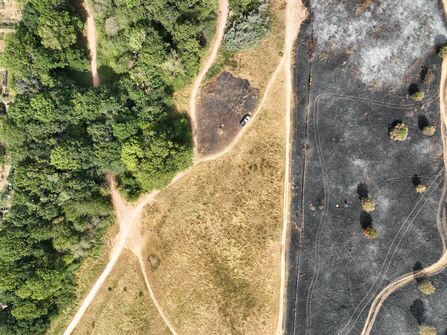
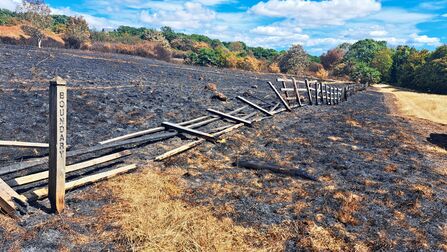
Here at Devon Wildlife Trust, we have experienced firsthand the devastating impact of fires in the Exeter Valley Parks. At Mincinglake Valley Park, 50 acres of land was burned; 700m fencing destroyed; and precious habitat for birds, butterflies and harvest mice lost in minutes. Elsewhere in the UK, we have seen significant fires at some of our most important wildlife habitats on the Suffolk Coast, the Cairngorms and South Pennines. 
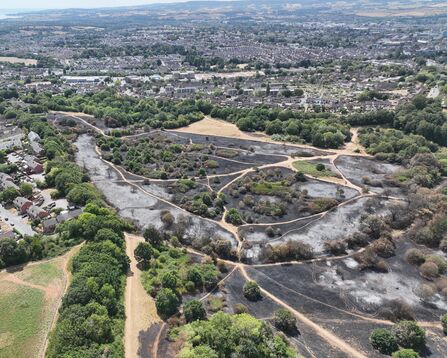
This has led some to conclude that conservation land management is to blame for the increase in fire risk. This is categorically not the case. Indeed, I want to outline here how managing land with the restoration of natural processes in mind can significantly improve resilience to fire, drought and flooding, while benefitting wildlife AND society.  

The enormously devastating Gironde fire in South West France last month demonstrates this at a vast scale. Much of this fire – the worst in France in living memory – consumed Europe’s largest artificial pine plantation. Prior to large-scale afforestation, much of what is now the Forêt des Landes was not dense forest at all. It was a mosaic of marshes, boggy peatlands and wet heaths. Deemed unhealthy and economically unproductive in the 19th century, successive state policies and incentives changed a naturally diverse and wet landscape into one large, contiguous, resin- and fuel-rich monoculture. Far from being a threat, ‘rewilding’ this landscape towards its previously natural state would unquestionably support a reduction in fire risk and fuel continuity.

We have seen this kind of land use change mirrored right across Devon and the UK over the last 150 years. Our upland moors, those fantastically mossy sponges that provide much of our drinking water and carbon storage, have been drained and degraded. Up to 95% of our dripping wet temperate rainforests have been lost. Only 10% of our moist Culm grasslands – for which Devon is so important – have escaped being dried out and ‘improved’ for agriculture.  Every major river in England has been diverted, channelled, or dredged to move water off the land faster. England has lost 90% of its wetlands, including almost half a million ponds. Put simply, we have desiccated our landscapes. 

Whilst these 19th and 20th century land use changes may have been driven by sound economic reasons at the time, their ecological consequences must now be urgently reversed, not just because of biodiversity loss but also because of their impacts on fire, drought and flood risk.  

So much of what Devon Wildlife Trust does – both on our own nature reserves and in supporting other land managers and farmers – is about putting water back in the landscape, and often in subtle ways. Restoring organic matter in soils is both great for agricultural productivity, whilst also holding significantly more water, carbon, nutrients and biodiversity than the degraded soils that blight much of our countryside. Planting in-field trees and hedgerows is, of course, great for wildlife. But they too hold water in their roots and soils. I have lost count now of the anecdotes I’ve heard of livestock flourishing in such green, shaded fields, long after other areas have become parched, sunbeaten and inhospitable to grazing animals.  

Even just a small rewiggling of a stream – allowing water to once again take its natural course – can profoundly reduce flood peaks while holding water longer (and therefore land less susceptible to fire) during times of low rainfall.

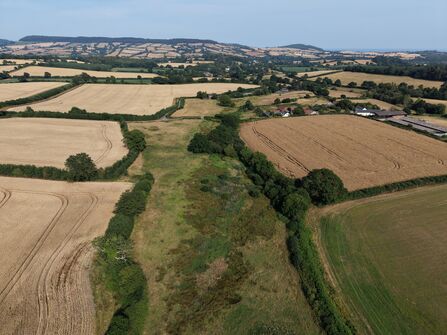
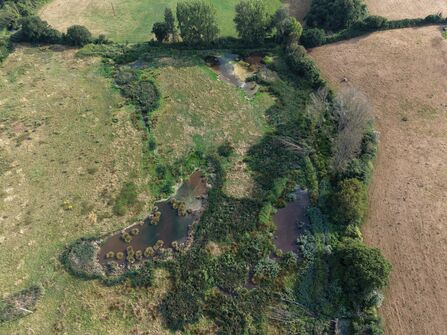
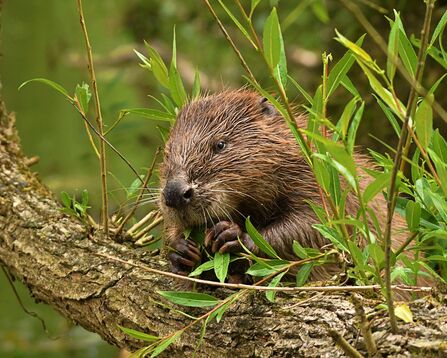
Arguably, nothing can reverse our ‘unwilding’ mistakes of the past quite so profoundly as nature’s greatest ecosystem engineers: beavers. Through going about their everyday business, beavers create landscapes of water. They hold water back during times of flood; they preserve supplies during drought; they improve water quality by trapping silt and excess nutrients; and as the pictures below so starkly demonstrate, they maintain a green oasis even when the land around them is starched and tinder dry. Who could argue that this very poster child of rewilding is anything other than of tremendous benefit in helping us adapt to a more extreme climate? 

It really is true to say that these nature-based solutions are a win-win. Of course, I won’t pretend that nature is the panacea, least of all when it comes to fire. The factors affecting fire risk are complex and despite the record-breaking weather this year, we must understand that the climate we live in today is the least extreme climate we will experience in our lifetimes.  

There will always be, therefore, a role for human interventions, such as cutting fire breaks and public education, to reduce fire risk. Very occasionally, burning itself can be used as a management tool, to reduce vegetation fuel load and maintain good habitat condition. But this needs to be done under very careful, boundaried, low temperature conditions. Some of the calls we have heard for a widespread increase in vegetation burning are reckless and short-sighted, especially when practiced on peat soils, such as those of our uplands. Drying peat soils through burning releases extraordinary amounts of carbon (not to mention the significant impacts on water quality and flood risk) and tragically reverses the very natural process of peatbog rewetting that would prevent fires in the first place.  

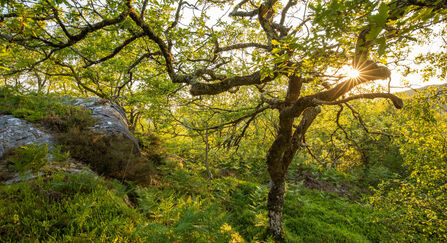
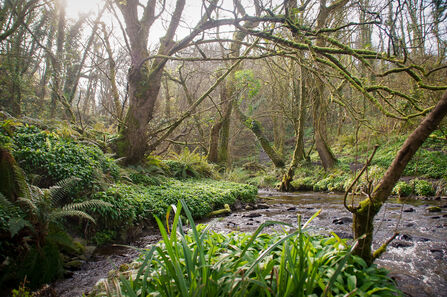
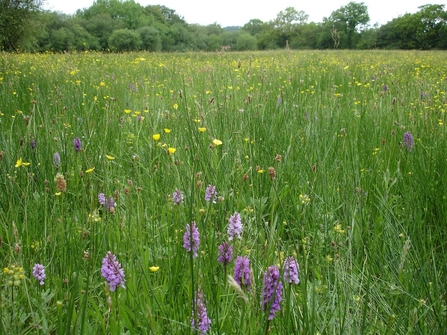
Rather than fighting fire with fire, we need to be looking to nature as the long-term solution. We have nothing to fear in restoring natural processes, and so much to gain. From the mighty impacts of beavers, to the rebuilding of our majestic temperate rainforests, to the almost imperceptible benefits of restoring a species-rich meadow, a landscape richer in wildlife is unquestionably one safer from wildfires, and better for us all.

How you can prevent wildfires

Studies estimate that around 90% of wildfires are started by human activity. Bonfires, barbecues, fireworks, discarded cigarettes and even littered glass can all spark a wildfire.

We can all help reduce the risk of wildfires during hot, dry weather by following this simple guidance:

  • No bonfires or barbecues
  • No cigarette butts
  • No littering (particularly glass or disposable vapes)
  • Report fires to emergency services 

You can also support our work for wildlife. Every donation helps us care for and restore precious habitats and protect the wildlife that depends on them 

Donate to the wildfire fund 

Become a member and support our work

The vital work we do for nature depends on the support of the people who care about the future of Devon's wildlife and wild places.

Become a member