Busy bringing nature back to Dartmoor

Busy bringing nature back to Dartmoor

Credit: Dean H, DWT

Dartmoor is where Devon shows off its wild side. But its nature is rapidly changing. Nick Bruce-White goes in search of solutions to the challenges facing life on the moor.

Nick Bruce-White spent his early years on his family’s Wiltshire farm before beginning a career in conservation with the RSPB. He became Devon Wildlife Trust Chief Executive in 2023. 

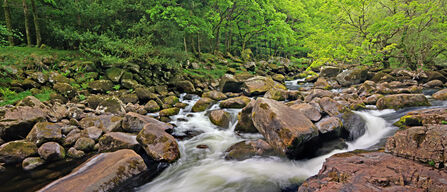
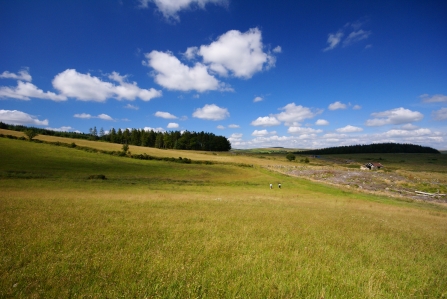
Ask anyone to imagine a vast wild landscape in the South of England and chances are that Dartmoor will come to mind. Like an enormous lump of granite, bog and forest, Dartmoor has parked itself in the middle of Devon, menacingly bearing over what might otherwise be thought of as a gentle bucolic county. A place that can lurch from the idyllic to the harsh and inhospitable (and back again) in a matter of minutes, Dartmoor is a capricious place, not for those seeking cosy comforts or fair weather.   

But it is perhaps this precise sense of rugged wilderness that draws millions of people to immerse themselves in Dartmoor’s nature, history and mesmerising landscapes each year. As the largest tract of semi-natural land in southern England, the National Park is an incredibly special place for wildlife in a world where space for nature is becoming ever more squeezed. 

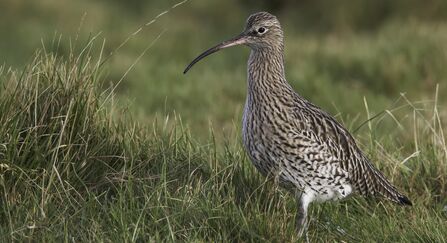
Its windswept moors, wooded valleys and upland farms remain home to species sadly lost from our wider countryside in Devon. In my lifetime nature has changed. I grew up to the sounds of cuckoo, skylark and curlew being relatively widespread. People now journey from far away to enjoy the once familiar song of the cuckoo, which can still thankfully be heard across much of Dartmoor. Some butterfly species, such as the high brown fritillary, can now only be seen on Dartmoor and but a handful of other places in the UK. Ditto the ash black slug: one of the world’s largest land slugs.  
“Dartmoor is still an oasis for wildlife, yet its natural heritage is a pale shadow of what it once was.”  

Yet despite Dartmoor still being something of an oasis for wildlife, its natural heritage is a pale shadow of what it once was. I’ll never forget stepping foot in Yarner Wood for the first time, hearing the cascading songs of wood warblers hit me in surround sound coming from the old oaks of its East Dartmoor woodland. Fast-forward only a decade and they are now gone. Other breeding birds such as golden plover, red grouse and ring ouzel have also vanished or are also on the brink of being lost.   

Dartmoor’s wildness may be masking the challenges its wildlife faces. 

The majority of Dartmoor’s most important areas for nature – the ‘protected sites’ designated as Sites of Special Scientific   Interest (SSSIs) – are shamefully failing to deliver for nature. In North Dartmoor, for example, 94% of the moorland SSSI has been assessed as being in ‘unfavourable condition’. Heather cover - so important for moorland birds and insects - has dropped from 25% to just 1% in some areas of the moor.   

The vast boggy mires which should sit atop Dartmoor’s plateau – holding clean water like a sponge; drawing carbon from the atmosphere; and providing a home for rare wildlife – have been severely damaged by decades of drainage, cutting, burning and erosion. Barely 1% of its deep peat remains in good health today.  

So yes, we can celebrate Dartmoor as a spectacular place, home to wildlife and wild spaces long since lost elsewhere. But if we’re to be honest with ourselves, we must acknowledge our shifting baseline: we should and can have much more nature on Dartmoor.   

The reasons for Dartmoor’s declining natural environment are complex and long-term: changes in livestock grazing, air pollution, extensive moorland burning, climate change and other demands on land use have all played a part. What matters now is that we do something about the nature crisis while we still can. 

“We just need to rewild it, right?” I hear that phrase a lot applied to Dartmoor and whilst it comes from a good place, it is riddled with misperceptions and a confused sense of what wild even is in modern times. Although “wild” is often the first word used to describe our uplands, this is a landscape like so many which has been shaped extensively by humans for millennia.  

Early farming in the Neolithic era began a process of woodland clearance for pasture, which accelerated following a major influx of settlers in the Bronze Age, whereupon the field systems and stone circles so typical of Dartmoor today were established. Large-scale mining for tin and copper left its mark in the Industrial Revolution, profoundly shaping the mighty River Dart and the quarried landscapes such as those around Haytor.  

“Remote and wild it may feel but make no mistake: Dartmoor is a human landscape to its core.”   


Today, the land, and everything living on it, is shaped largely by the ponies, sheep and cattle, many of which roam under the stewardship of ‘commoners’: farmers and smallholders with grazing rights across the vast open commons which cover the high moor. Remote and wild it may feel but make no mistake: this is a human landscape to its core.   

Whether human influence on Dartmoor has been for better or for worse, we have a choice now to do more of the former. The good news is that nobody can disagree with the need for change. And whether it be government-led reviews or public opinion surveys, nature recovery consistently emerges as the top priority for Dartmoor and our National Parks more generally.  

The less good news is that agreement on WHAT must change and HOW is rather less hard to find. So, it was in acknowledgment of this – the critical need to seek alignment on the solutions for Dartmoor’s most important places for nature – that the Dartmoor Land Use Management Group was established by government last year. I was delighted to be invited to sit on the group, alongside farmers, scientists, government agencies and representatives from other environmental organisations. Together we are charged with agreeing innovative solutions for Dartmoor’s land management which will recovery nature alongside supporting sustainable farm businesses which can thrive long into the future. Nature needs farming on Dartmoor, and farming needs to work in all of society’s interests. 

For those who might challenge any enthusiasm on this issue from farmers, the three Landscape Recovery projects in development in West, Central and East Dartmoor do provide encouragement that a spirit of collective endeavour for nature is there. These projects form part of the government’s flagship scheme to support land managers in working together across an entire landscape to deliver nature restoration through sustainable farming. And farmers are engaging with the schemes in big numbers.   

Devon Wildlife Trust has led the development of the East Dartmoor Landscape Recovery Area scheme, and it has been an inspiration to work with private landowners, commoners and partner organisations to develop a shared plan for nature recovery. A plan not imposed from above but designed from the ground up. We don’t always agree, but amidst the tensions and constructive debate, great solutions always emerge. The three Landscape Recovery projects now await a decision from government and critically, whether they have secured the funding required over the coming 20 years.   


In recent years Dartmoor and Exmoor have demonstrated that even when species have been lost, they can be returned.  

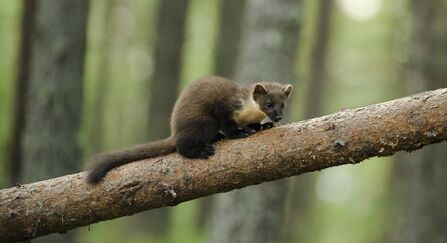
Over the past two years, the Two Moors Pine Marten project has successfully reintroduced pine martens to the Westcountry after an absence of nearly 150 years. Even if I were never to see a pine marten, my walks in Dartmoor’s woods are now filled with a heightened sense of hope and anticipation, knowing that I could be under the watchful eye of a creature last here when Queen Victoria was on the throne.   

Our National Parks have a critical role to play as launchpads for the re-establishment of lost species across the wider countryside. White-tailed eagles may soon be returning to Exmoor. Wildcats, we hope, will once again call the South West home. Both species were once persecuted to all but the remotest corners of Scotland, but if we want to make it so, places like Dartmoor can thrive with life again.   

Proof of that came to me in abundance last year, as I spent my summer weekends in search of Dartmoor’s rare fritillary butterflies. After just three years of focused habitat management by DWT’s nature reserve team and its volunteers on a few key sites, the response from the butterflies has been inspirational. Having last seen high-brown fritillaries as a volunteer 25 years ago, I was overwhelmed to see over a dozen of them along the Dart Valley in June. To see Britain’s most threatened butterfly darting in numbers across the nature reserve was a sight I feared we had consigned to the past. When we know what to do and we act accordingly, nature rewards us. 

For this reason, I have a great deal of hope in Dartmoor’s future. I have never before known such widespread interest and passion in making our landscapes more nature-rich and climate resilient. People will no longer stand for inexorable wildlife declines, for ever-deteriorating water quality, for precious habitats going up in flames, least of all in our National Parks.   

When faced with challenges as existential as these, a quote by Dale Carnegie often comes to me: “Inaction breeds doubt and fear. Action breeds confidence and courage. If you want to conquer fear, do not sit home and think about it. Go out and get busy”. We have so many of the solutions at our disposal, we have the will and belief in a better future. 

Now it is time to go out and get busy.   

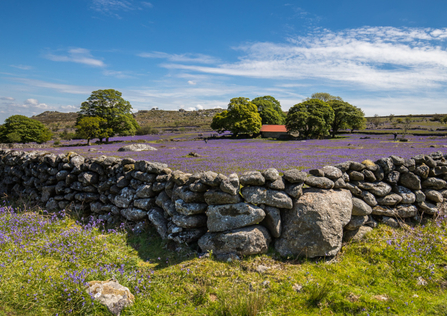
Emsworthy red barn and bluebells image taken by S Hussey

S Hussey

Discover nature at our reserves

Browse the reserves