
Weasel or stoat?

Weasel or stoat?

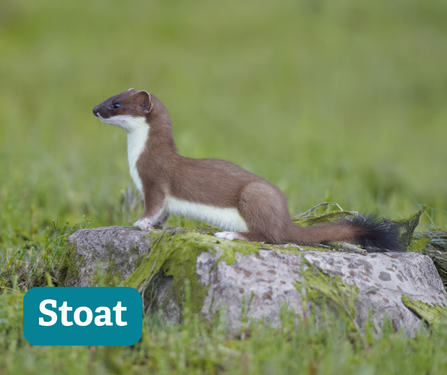
Stoat. Photo, Andy Rouse/2020VISION

The encounter is often brief – a blur of brown fur crossing the path in front of us. Was it a weasel or was it a stoat?

Weasels and stoats are the smallest members of the British mustelid family, which also includes badgers, polecats, pine martens, and otters. Mustelids vary widely in size, appearance, and habitat, but they typically share a long body, short legs, and thick fur. So how can you tell the difference between the tiniest members of this family?

Here we offer some practical tips which give you a chance to unravel the mystery.

Body size

Weasels appear tiny and are the UK’s smallest carnivore. Their body length is usually between 17-22cm. They weigh between 50-130g – about the same as a bar of soap. Stoats are bigger, measuring between 25-32cm and weighing between 140-445g. Males are larger than females in stoats and weasels.

Fur colour

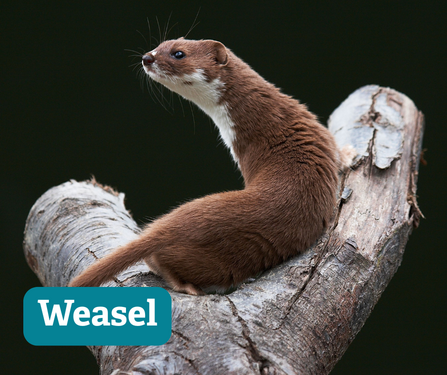
Both are brown with a pale belly and chest. But a closer look (if you get the chance!) reveals differences. The pale fur on a weasel’s underside tends to be brilliant white, compared to the stoat’s which is cream. The separation of brown and paler fur on each animal is different too – it tends to be a clear, straight border on a stoat, whereas on weasels the divide is irregular and less distinct.
Tell-tails

Weasels have short, thin tails, usually of no more than 3-6cm. They are also uniform brown. Stoat’s tails are longer (7-12cm) and thicker with a distinctive black tip to them. 

The way they run 

Weasels scurry on short legs which keep them flat and low to the ground. Stoats travel with bounding leaps, showing off their supple, arched backs as they move.

Where they are most often seen

Weasels usually stay hidden, sticking to hedges, scrubby undergrowth and drystone walls. Stoats are the more likely of the two to be seen in the open.

What they hunt

Weasels stick to small prey, usually no bigger than rats, mice and voles. Stoats take advantage of their bigger bodyweight to tackle prey as large as rabbits, sometimes even hares.


Hopefully, if you spot one now, you’ll be able to tell the difference!

Become a member and support our work

The vital work we do for nature depends on the support of the people who care about the future of Devon's wildlife and wild places.

Become a member