

Mike Symes
River Otter Beaver Trial
About the project
A population of beavers, of unknown origin, has been present on the River Otter since around 2008. However, when video evidence emerged proving that the beavers had given birth to kits (young) in 2014, the UK Government initially planned to have them removed from the river.
DWT opposed their removal and after consulting with the local community, landowners and public bodies, presented an alternative plan: to turn the situation into a five-year trial to monitor the beavers’ effects on the landscape and learn how to manage any conflicts that may arise.
The River Otter Beaver Trial ran from 2015 to 2020 – it was England’s first wild beaver re-introduction project, with beavers not in fenced enclosures but free to establish territories along the full length of the River Otter and its tributaries.

Beaver kit on River Otter by Mike Symes
Starting with two family groups, who were health screened and then re-released on the River Otter in March 2015, by the end of the five-year trial there were an estimated fifteen family groups throughout the catchment.
As part of the licence issued by Natural England, DWT was permitted to introduce more beavers to the River Otter. The presence of beavers unrelated to the original family group was important for the genetic diversity of the population.

Female beaver released on pond near River Tale in 2016, photo Nick Upton
The first such introduction, of a male and female on a site on the River Tale in 2016, allowed DWT to study the effects of beavers on an upstream part of the catchment at a time when the other family groups were mostly in the deeper waters downstream on the River Otter.
Three more beavers were released in the Otter catchment by DWT in 2019.

Mike Symes
Project partners and funders
The River Otter Beaver Trial was led by Devon Wildlife Trust in partnership with The University of Exeter, Derek Gow Consultancy, and Clinton Devon Estates. Expert independent advice was also provided by the Royal Zoological Society of Scotland, Professor John Gurnell, and Gerhard Schwab, an international beaver expert based in Bavaria, Germany.
The River Otter Beaver Trial was supported by The Peter De Haan Charitable Trust, The Royal Society of Wildlife Trusts, Garfield Weston Foundation, Tale Valley Trust and donations from local residents, DWT members and the general public.
Thank you to everyone who supported England's first wild beaver re-introduction project and the return of the Eurasian beaver to the English landscape.
The River Otter Beaver Trial Science and Evidence Report
Click below to read the River Otter Beaver Trial Science and Evidence Report. This major report from the five year trial finds that beavers bring benefits to both people and wildlife...
River Otter – Beaver Management Strategy
The River Otter Beaver Trial (ROBT) five-year term concluded in March 2020. The ROBT Steering Group, made up of a diverse range of stakeholders, recognised the critical need to prepare for a potential scenario that Defra allows the beavers to remain in the River Otter catchment after 2020.
A Management Strategy Framework was produced with expert input from a wide range of national stakeholders and international advisors. This strategy would be used to inform decisions regarding the long-term management of beavers, the wetland habitats they establish, and their general activities in the River Otter in the future.
In August 2020 the Government announced that Devon's beavers could stay - and spread naturally into other river catchments. This was a landmark decision and one of the most important moments in England's conservation history: the first legally sanctioned reintroduction of an extinct native mammal to England. It was the first legally sanctioned reintroduction of an extinct native mammal to England. It meant that the beaver population, which lives on the River Otter and is estimated to consist of up to 15 family groups, has a secure future. You can read the announcement here,
In February 2025. Government announced that beavers were allowed to live wild in English rivers for the first time in centuries. This is a landmark decision. Read our response here.
Beaver Management Strategy and Appendices:
- Appendix 4: International Perspectives (235.39 KB)
- Appendix 5: Assessment of Likely Risks (1.06 MB)
- Appendix 5a: Risk Assessment (290.1 KB)
- Appendix 6: Governance Structures (290.26 KB)
- Appendix 7: Beaver Management Strategy (1.28 MB)
- Appendix 9: Outstanding Issues to be Resolved (197.89 KB)
In August 2020 the Government announced that Devon's beavers could stay - and spread naturally into other river catchments. This was a landmark decision and one of the most important moments in England's conservation history: the first legally sanctioned reintroduction of an extinct native mammal to England. It was the first legally sanctioned reintroduction of an extinct native mammal to England. It meant that the beaver population, which lives on the River Otter and is estimated to consist of up to 15 family groups, has a secure future. You can read the announcement here,
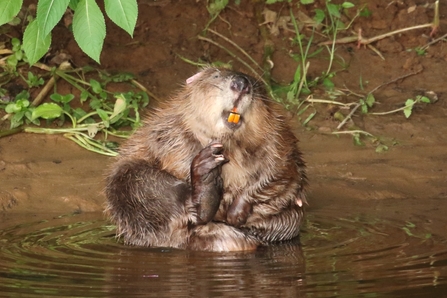
Mike Symes
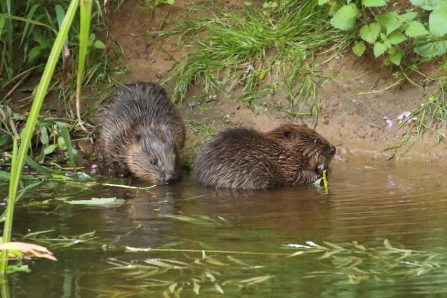
Mike Symes
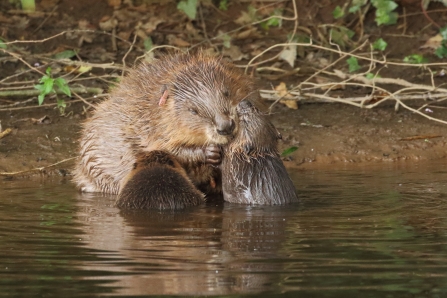
Mike Symes
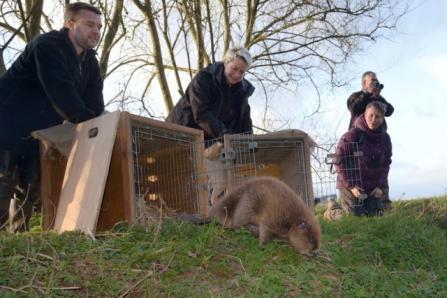
Photo, Nick Upton
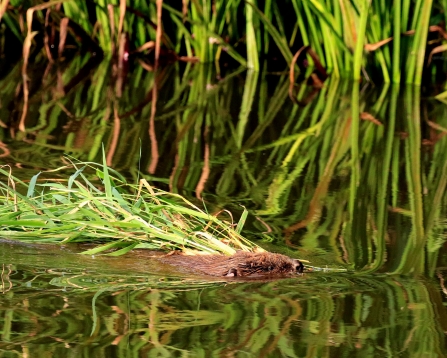
David R White
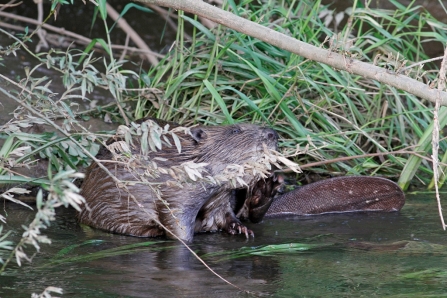
Photo, Chris Townend
Want to learn more? Find further research, reports and FAQs here:
- Learn more about beavers (https://www.devonwildlifetrust.org/beaver-faqs-and-research)
- Where to see beavers (https://www.devonwildlifetrust.org/where-see-beavers)
- Making space for beavers (https://www.devonwildlifetrust.org/making-space-beavers)
- Our work with beavers (https://www.devonwildlifetrust.org/our-work-beavers)